
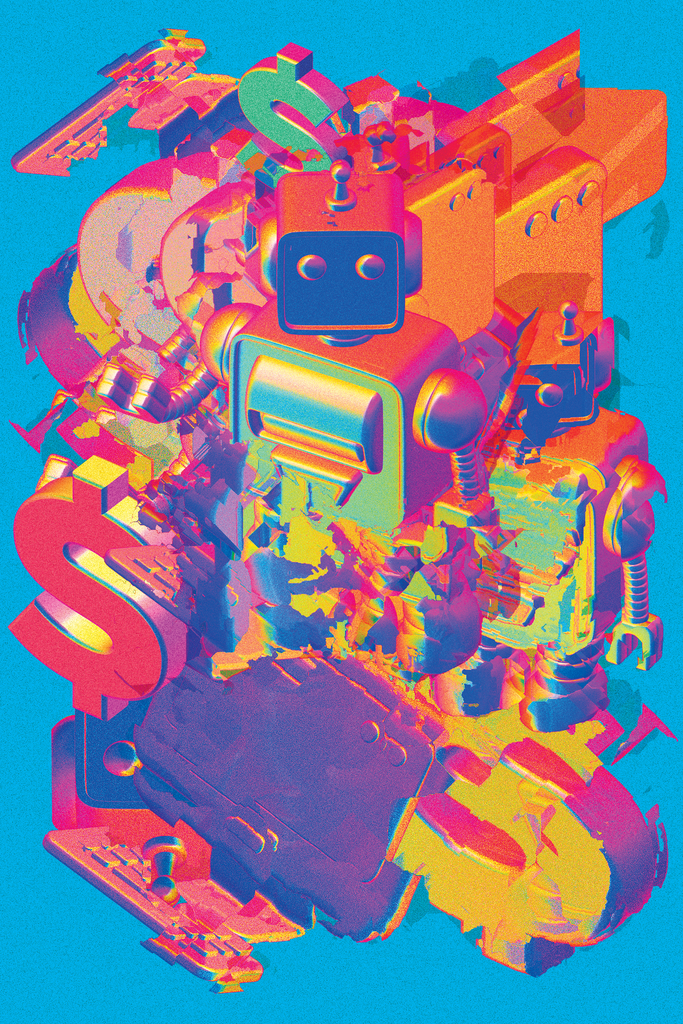
The CEO of OpenAI, Sam Altman, spoke of the company’s plans to build the scale of inputs in artificial intelligence.
“It is foreseeable that OpenAI will invest hundreds of billions of dollars in the near future, for example, in the construction of data centres,” Altman said recently when he spoke about large computing facilities that support AI technology.
“As can be expected, a bunch of economists are worried, saying, “This is crazy, too reckless”. That’s all we can say: “You know what? Let’s do things our way. * I don’t know.
So, what is that thing? It is difficult to tell the outside world what it is building and why it spends so much money, as the technology industry continues to spend money, turning agricultural land into a data centre and artificial intelligence researchers into the highest-income group in the country.
Are they building an artificial system of intelligence comparable to humans? Or is it the creation of a machine that will change the world’s gods without first destroying humanity? Are they developing software that’s been sold for decades, the luxurious upgrades? This huge investment is a bold plan to create virtual network friends and accurate advertising? Or are they just afraid to miss what others are doing?
The following is a concoction of these visions — from the most realistic vision to the emptiness of the sky — and the reasons why they are trying to achieve them:
Commitment: a better search engine
Chat robots are in a way like search engines, but they provide easy-to-understand natural language answers rather than a list of blue links. This may be a faster, simpler and more intuitive way of answering questions, although chat robots often make mistakes and even fabricate content.
Google’s search engine is the most profitable business in the technology industry. If companies can provide better access to information, they can rob a market of billions of users.
Hundreds of millions of people are already using chat robots to access information. ChatGPT’s monthly live users alone are over 700 million.

However, making a profit remains an industry challenge. Operating a chat robot is much more expensive than maintaining a regular website. Moreover, the digital advertising profit model of the traditional search engine does not necessarily apply to this area.
OpenAI provides a $20-a-month-paid version of ChatGPT, which, according to the company, covers at least its own operating costs. However, paid users account for less than 6 per cent of the total number of users.
The free version is still in deficit, as OpenAI has not begun to try to advertise. In contrast, Google ‘ s search engine serves approximately 2 billion users per day, generating up to $54 billion in advertising revenue per quarter.
(The New York Times has indicted OpenAI and Microsoft for unauthorized use of its information content to train artificial intelligence systems. These companies denied this.
Commitment: tools to improve office efficiency (and even replace manpower)
The technology that drives ChatGPT is not only an answer to questions, but also an instrument for improving efficiency. Artificial intelligence can generate computer programs, summarize documents and meeting content, draft e-mails and even operate other software applications such as spreadsheets and online calendars.
The executives of technology enterprises believe that as artificial intelligence enters the fields of law firms, hospitals, news editors and so forth, it may reshape business ecology. Companies such as Microsoft and OpenAI have already earned considerable income by selling artificial intelligence systems capable of generating computer programs.
The total total investment in large data centres by Amazon, Google, Meta, Microsoft and OpenAI this year will exceed $32.5 billion, or $100 billion more than Belgium ‘ s one-year national budget. Andy Jasi, Chief Executive Officer of the Amazon, stated that, in the long term, about 10 per cent of the infrastructure would be used to build artificial intelligence technologies, while 80 to 90 per cent would be used to deliver those technologies to clients.
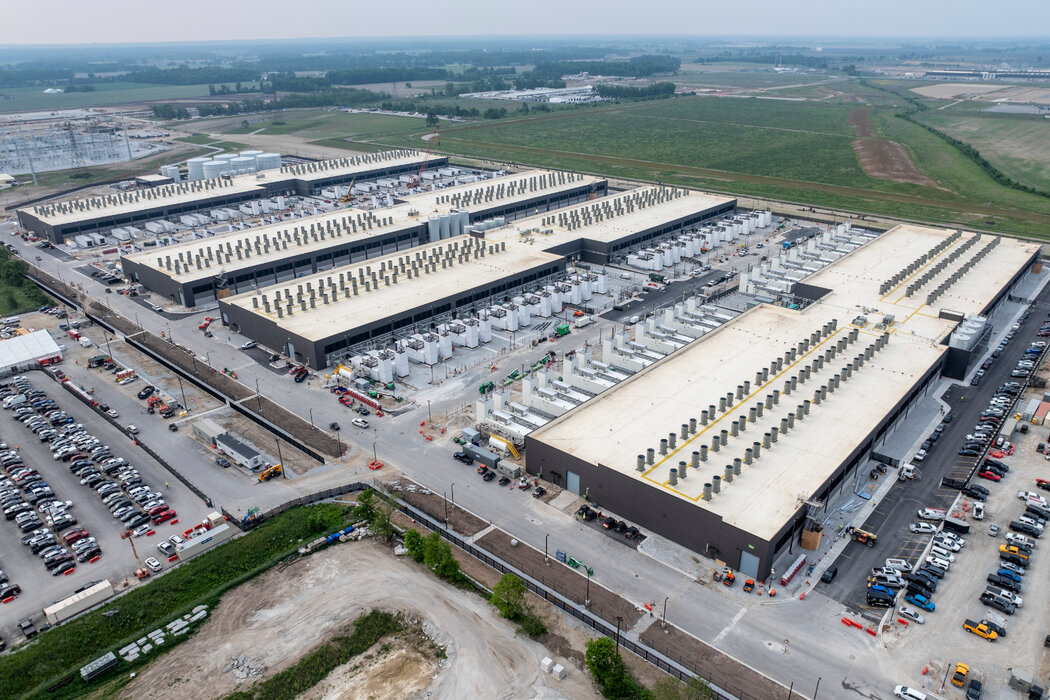
Amazon is building a large data centre complex in Indiana to support its collaboration with the artificial intelligence start-up company Anthropic.
Many enterprises have started testing artificial intelligence, but have not yet achieved large-scale applications in the United States economy. Unless companies such as Amazon, Google and OpenAI continuously improve these technologies, the spread of artificial intelligence may be slower than expected.
According to a study by McKenzie, nearly 80 per cent of companies have already started to use generating artificial intelligence, but the same percentage of firms have indicated that it “failed to bring significant economic benefits”.
“This card house is about to collapse,” said Sasha Lusioni, researcher of the artificial intelligence starter Hugging Face. “Currently disproportionate to business returns.”
Commitment: Almighty Digital Assistant
Technology companies are also integrating technology like chat robots into various consumer products and services. They say that artificial intelligence will appear as a digital assistant anywhere you need.
Meta is applying this technology to smart glasses to enable people to identify landmark buildings while walking in the streets and translate road signs when travelling abroad. Amazon sees artificial intelligence as the key to innovation in all its operations — from the shopping site to Alexa’s voice assistant — which can be fully upgraded through AI.
If you start using digital assistants, the company behind you has more ways to get your attention and eventually sell you goods.
As a result, these companies are making every effort to embed artificial intelligence technology in a variety of equipment and online services in an effort to control users ‘ Internet usage.
“All will be completely changed by artificial intelligence,” said Rohit Prasad, Senior Vice-President of the Amazon. “This is no scientific experiment.”

Amazon has implanted artificial intelligence in Alexa’s smart home facility.

Meta has added artificial intelligence to its Ray-Pon smart glasses.
Meta’s artificial intelligence lenses are still small, with only millions of users. Alexa in the Amazon is more popular, but the number of users remains limited compared to all computers and mobile phones worldwide.
Alexa itself has been at a loss since it was first issued more than a decade ago. It is primarily used to promote the development of other products and services.
An upgraded version was provided free of charge to all Prime members when the Amazon was remodeling Alexa with new artificial intelligence technology. Artificial intelligence may increase its popularity, but it remains difficult to achieve a profit breakthrough in the short term.
Commitment: Friends of artificial intelligence
Meta and a number of start-up companies, including Character.AI and XAI of Elon Mask, began to provide a brand-new artificial intelligence robot escort service. People can interact with these robots on social networks, almost as much as real people.
In a recent podcast interview, Zuckerberg stated: “The general population desires more connections and interactions than they now have.”
Zuckerberg and Mask operate social networking platforms with the ability to charge fees for their virtual friends ‘ services. Mask has launched a subscription service for chat robots at a monthly cost of $300.
Meta can also charge subscription fees like OpenAI for ChatGPT, but it has always preferred to raise advertising revenue by keeping users on Facebook, Instagram, and WhatsApp. (The company also uses artificial intelligence in this area.) Meta recently found an almost 7 per cent increase in the number of hits of advertisements made using new artificial intelligence techniques.
Some people have seen chat robots as friends, but the company of artificial intelligence is beginning to be heavily criticized. These technologies can alienate people from real human relationships and even lead to worrying delusions.
This area, which has been a few years away from the formation of a mature market, is only one of the many directions of technological enterprise exploration.
Some observers compared the layout of the technology giant to the chess game, competing for the next generation of technology leadership.
“So much power is concentrated in the hands of a few”, David Kane, a partner in the capital of Silicon Valley, said, “The game they are playing will affect the future of all of us.”
Commitment: scientific breakthrough
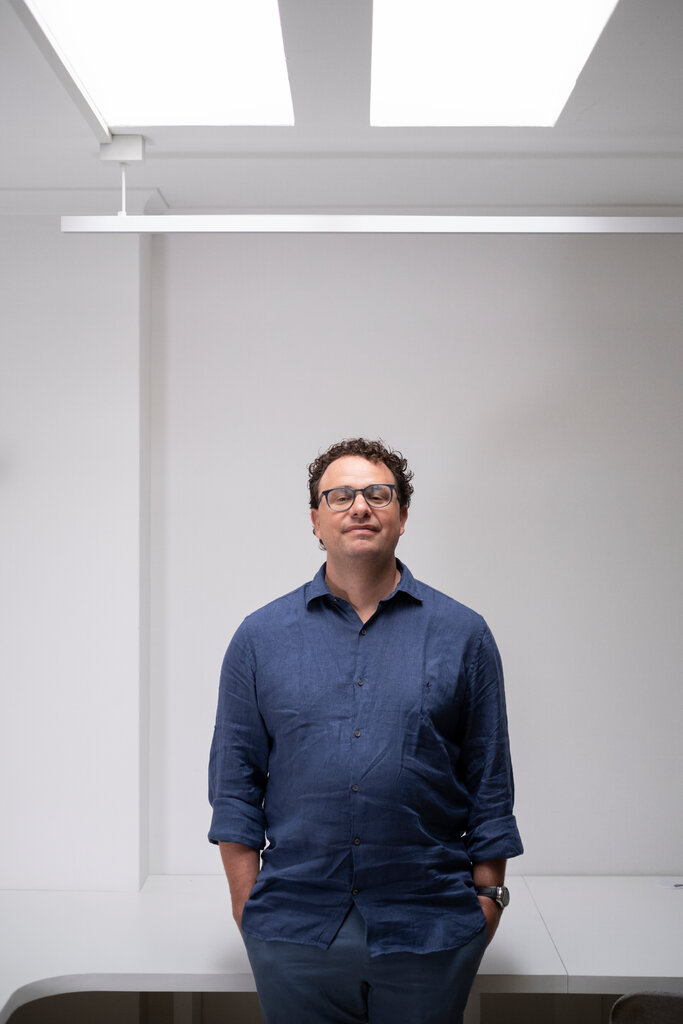
The CEO of Anthropic, Dario Amodei, wrote a long article on the future of artificial intelligence.
The CEO of Anthropic (one of OpenAI’s main competitors), Dario Amodei, believes that artificial intelligence in the coming years – and most likely next year – will be like building a “genius nation in a data centre” that can work together to solve the major scientific challenges facing human society.
Technical experts such as Amodei believe that such technologies will revolutionize life as we know it. Last year, he stated in a long text that artificial intelligence could eventually cure cancer, eradicate poverty and even bring about world peace.
He predicted that in 10 years, artificial intelligence technology would double the average life expectancy of ordinary people to 150 years.
The path to the realization of such technologies is unclear and even their feasibility remains controversial.
But James Manica, Senior Vice-President of Google for Research, Laboratory, Technology and Social Affairs, stated that Google, while pursuing more ambitious goals, would develop technologies that could be put into use immediately. He referred, for example, to AlphaFold, a system developed by Google that could accelerate the development of drugs in a number of small but critical areas, recently awarded to its developers the Nobel Prize for Chemistry.
The Google-flagged Isomorphic Labs are working to make a profit by assisting pharmaceutical companies in applying such technologies.
Commitment: Equivalent and beyond human artificial intelligence
Directors such as Zuckerberg and DeepMind Research Laboratory Director Demys Hasabis have indicated that their company is working on the development of universal artificial intelligence (AGI), a machine capable of matching human brain capabilities and even more powerful technology – superintelligence.
Many technologists are determined to pursue the greatest goal they can imagine: super smart. Technical experts have been pursuing this dream since the 1950s.
Concepts such as General Artificial Intelligence and SuperIntelligence are difficult to define precisely. Scientists could not even agree on a definition of “human intelligence”.
The machine that truly resembles the human mind is still out of reach, perhaps for decades or more.
No one has been able to clearly explain the profit path of such technologies. When technology companies spend hundreds of billions of dollars building new data centres, they are actually “playing a bet”.
The founding CEO of the Alan Institute of Artificial Intelligence, Oren Ezioni, stated that behind this “gathering” was a common drive mix of Silicon Valley giants: greed, complacency and fear of being replaced by sudden technological breakthroughs. “If I can only describe it in one word, Ezioni says, “That’s FOMO.”
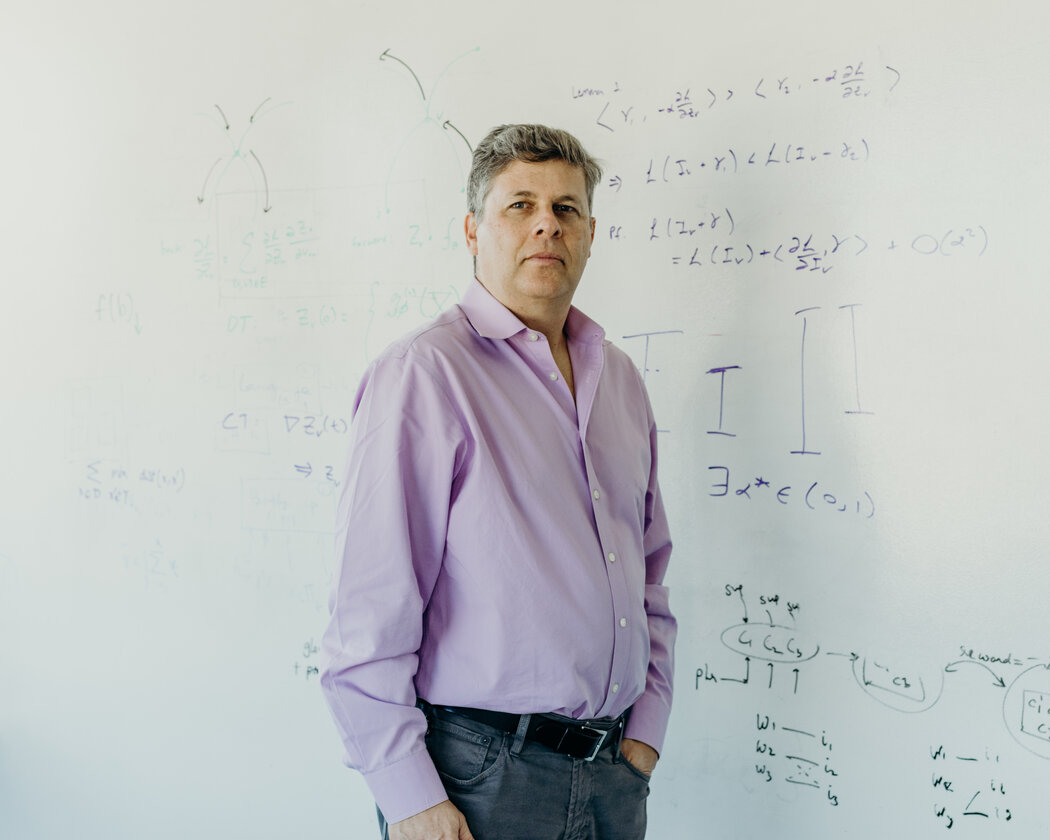
The founding CEO of the Alan Institute of Artificial Intelligence, Oren Ezioni, believes that many technology companies are afraid to miss the opportunity of artificial intelligence, even if they are not sure what they are going to miss. Kyle Johnson for The New York Times
FOMO costs a lot. Altman indicated that some investors may have overinvested when he and his competitors pursued these ambitious targets. Researchers may find ways to develop AI, where the demand for hardware is significantly reduced; people may not really want the artificial intelligence that these companies are building. The rapid development of artificial intelligence technologies over the past few years may slow down or even stagnate. The overall economic pattern may also be transformed by other unrelated factors.
“Some of our competitors will burn out money, fail, others will be very successful — that is how capitalism works.” Altmann says. “I guess someone will end up losing amazing money.”